THE PLANT
Only the female cones
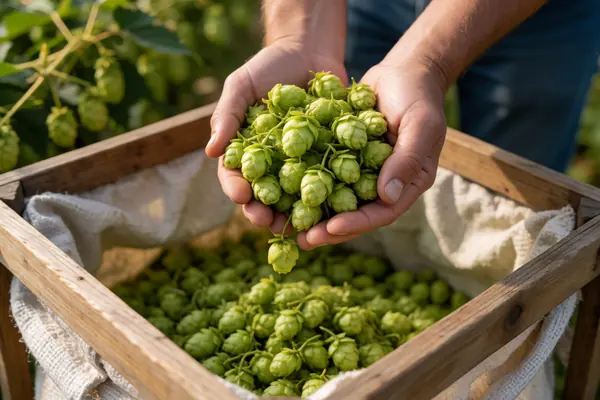
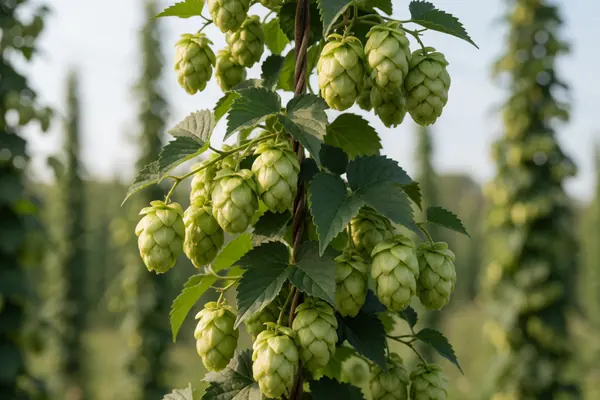
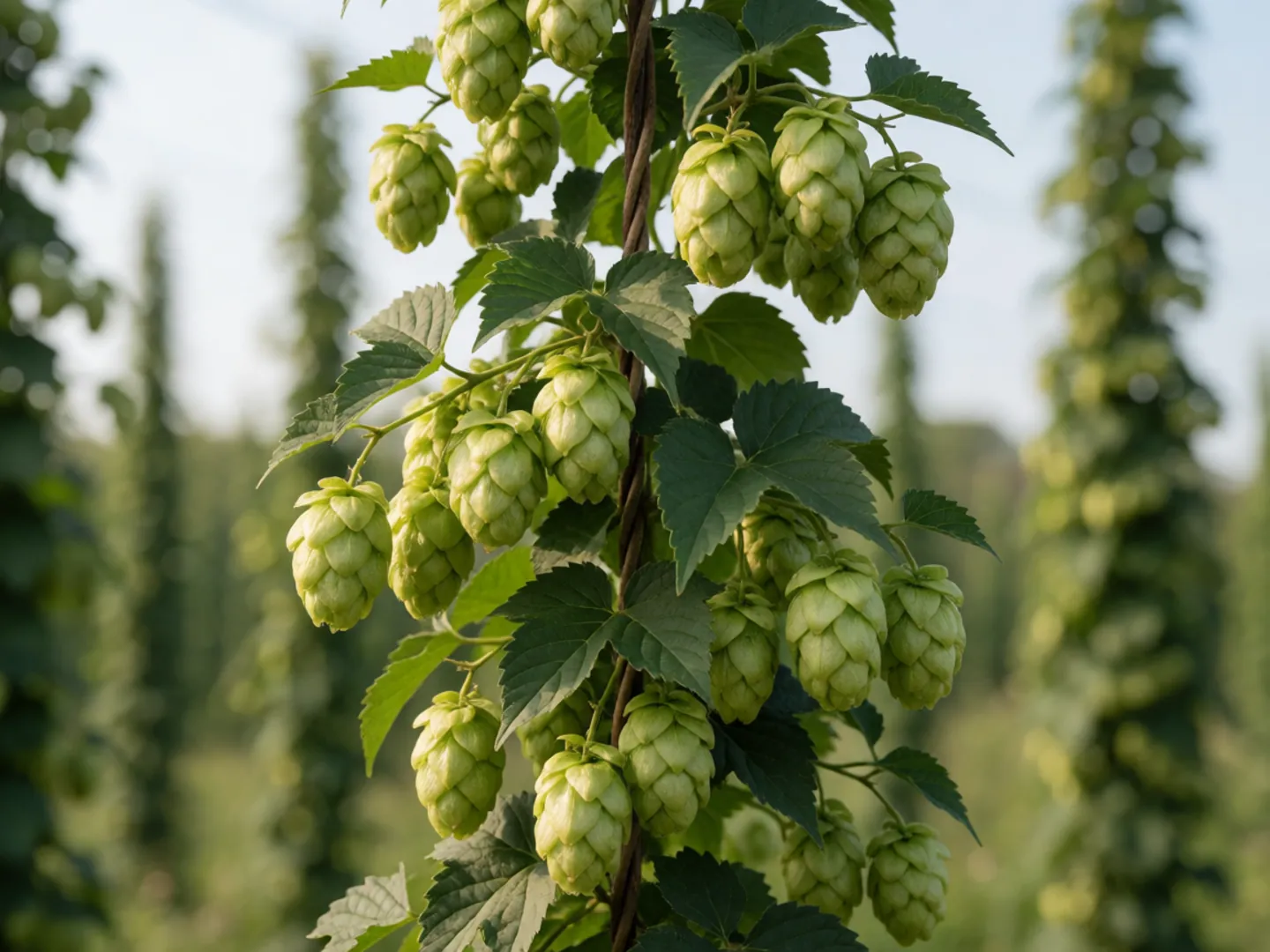
The hop is a tall climbing plant with separate male and female plants. Only the female plant bears the cones used in brewing, and their sticky lupulin gives bitterness and aroma.
Follow the hop year doodlebeer
A HISTORY OF THE HOP
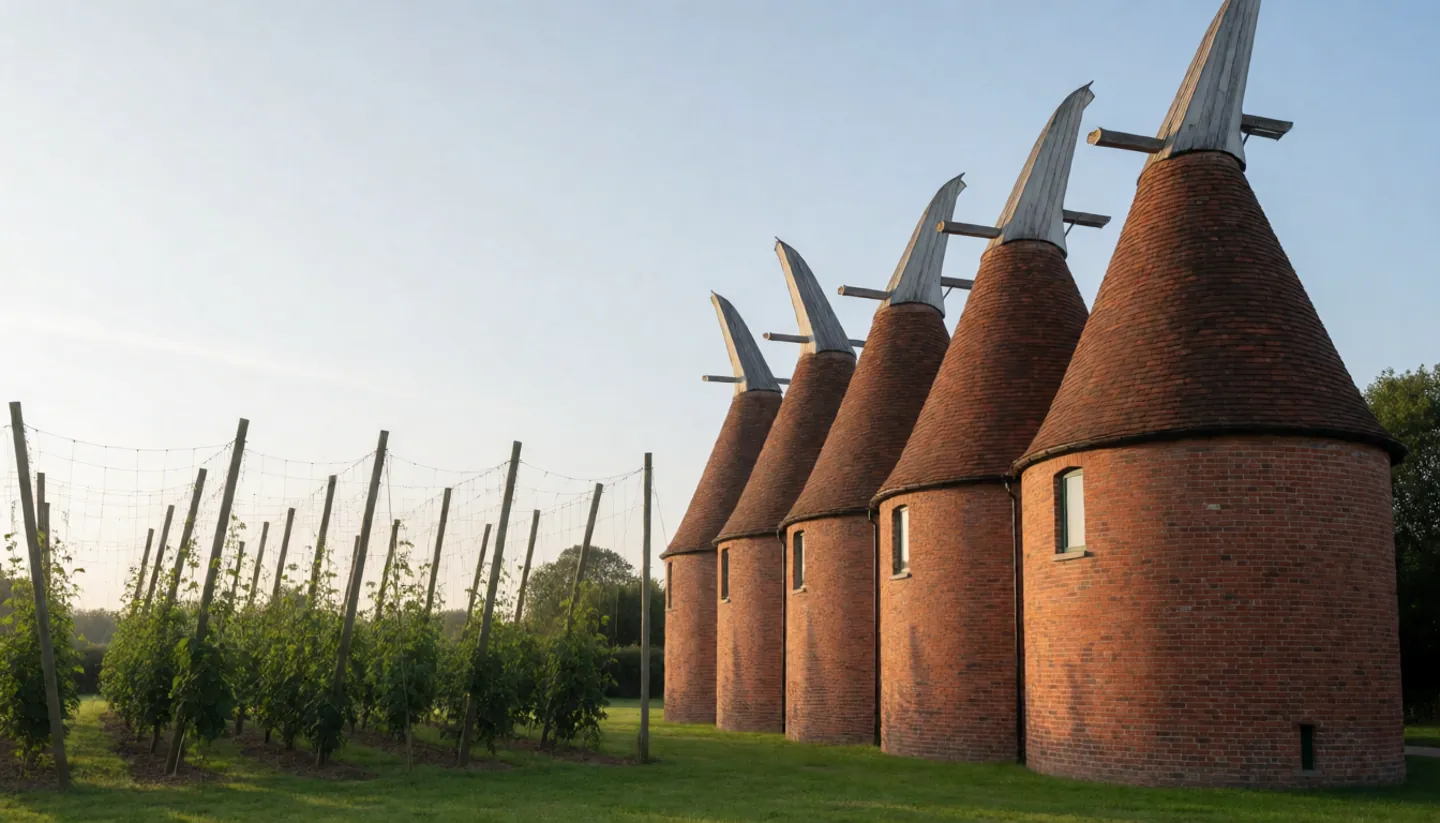
Those round towers with pointed white cowls in the Kent countryside were built to dry a flower.
This independent guide follows the hop from the climbing plant itself, to its arrival from Flanders around 1500, to the oast houses, hop gardens and hand-pickers who shaped the south-east of England.
WOLF OF THE WOODS Humulus lupulus
Follow the hop yearTHE SHORT ANSWER
Hops came to England as an import.
Within a century they were a Kent crop.
THE PLANT
The hop is a tall climbing plant with separate male and female plants. Only the female plant bears the cones used in brewing, and their sticky lupulin gives bitterness and aroma.
Follow the hop yearTHE ARRIVAL
Ale was the old English drink, brewed from malt without hops. Hopped beer came from the Continent, and hop growing reached Kent from Flanders around the start of the 1500s.
See the numbersTHE HARVEST
Every September until the 1960s, thousands of east and south-east Londoners went to Kent to pick hops by hand, a paid job many families treated as a holiday.
Where to see it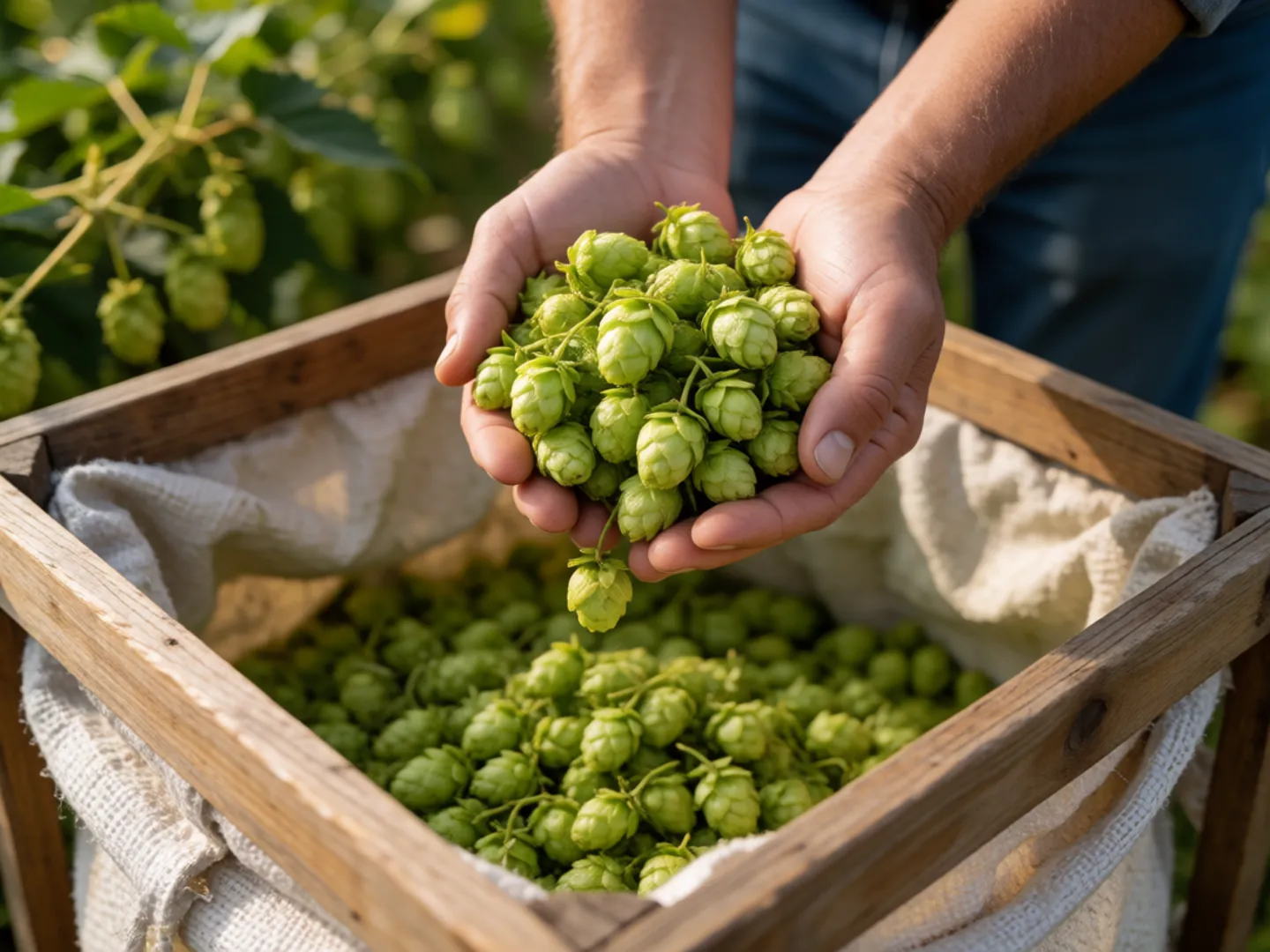
READING THE LANDSCAPE
Hops are now grown mainly in the south-east and the West Midlands, but the buildings and field patterns of the old trade are still easy to read.
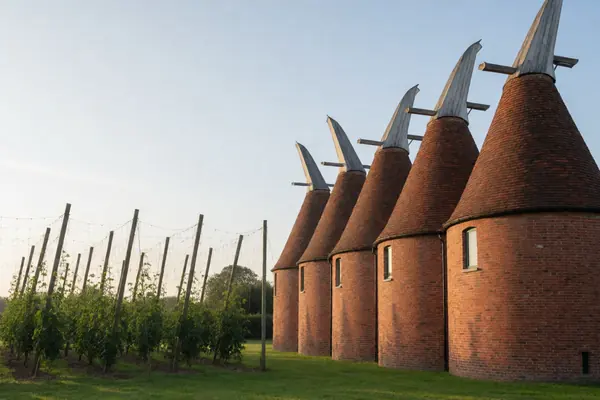
The white cowl on top of a kiln swings in the wind to control the flow of air through the drying hops.
The familiar round kilns date only from the 19th century, the golden age of hop growing. Many oasts are now homes.
A traditional hop garden is a grid of poles, wires and strings about 20 feet high. Newer hedgerow hops grow to about 8 feet.
An 18th-century Act required hop pockets to be stencilled with the year, place of growth and grower's name, a custom that continues today.
TWO NUMBERS WORTH KNOWING
One figure for the peak of English hop growing,
one for what the oast has to do.
77,000 acres
Peak English hop acreage, 1878
The British Hop Association says acreage peaked in 1878. By 1909 it had fallen to 32,000 acres as tastes moved to lighter pale ales and pasteurisation meant fewer hops were needed as a preservative.
HOP ACREAGE · BRITISH HOP ASSOCIATION
80% → 10–12%
Moisture in a hop cone, before and after the kiln
Fresh hops start to compost almost immediately. Drying in an oast or kiln brings moisture down from over 80% to between 10 and 12%, so the crop can be stored and shipped.
DRYING · BRITISH HOP ASSOCIATION
Sources differ slightly on the start date: the British Hop Association places the first hop growing near Maidstone at the end of the 15th century, while a Kent Archaeological Society study dates commercial growing to the first half of the 16th century.
THE HOP YEAR
Pick a stage of the traditional hop year to see what happens to the plant. The bar shows how far through the growing year that stage comes.
Based on the British Hop Association's descriptions of the hop plant and harvest. An independent history guide.
THE PICKERS
Local women were the first hop-pickers. As demand for beer grew with the cities, farms recruited from London's East End, and families came down on special trains for about a month, often returning year after year.
It was not always idyllic. In 1755 the London Evening Post reported that a hundred poor people had died in Kent barns for want of the necessaries of life. Later pickers' huts were the size of garden sheds and could house a family of ten. Picking machines ended the tradition in the 1960s.
Questions
Today the words mean much the same. Originally ale was brewed from malt without hops, the drink of the Anglo-Saxons and English, while beer was brewed with hops. The printer William Caxton summed it up as 'Ale of England; Byre of Alemayne'.
The British Hop Association says the first reason was to keep beer in good condition: hops act as a preservative. The bitterness, which comes from alpha acids in the lupulin, was at first only reluctantly accepted.
A building for drying and packing hops. It has one or more kilns where hot air dries the cones, plus rooms for cooling, packing and storing. Growers usually say 'oast'; 'oasthouse' first appears in the 18th century.
In 1574 Reynolde Scot, from a Kent family, published A Perfect Platform of a Hop Garden, the first English book devoted to growing hops, including how to build a kiln to dry them.
The first hop-picking machine used in Britain was imported from America by a Worcester grower in 1922, but machines only became widespread from the late 1950s. London's annual hopping trips ended in the 1960s.
Updated
ABOUT THIS NAME
doodlebeer.com is part of the DoodleSale portfolio. It isn't in an auction right now, but you can ask about leasing it.